
Some illnesses can severely affect mobility over time. Daily living activities may become more difficult as the condition progresses. Stone Man Syndrome It is a rare disease that causes muscle and connective tissues to ossify over time.
What is Fibrodysplasia Ossificans Progressiva and How Does it Develop?
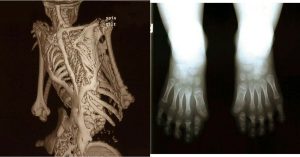 This disease is a very rare genetic condition. Soft tissues in the body transform into hard bone structure over time. This transformation proceeds differently from the natural healing process. Uncontrolled development occurs at the cellular level. The disease is associated with a genetic mutation. This mutation causes muscle tissue to transform into a different cell type. Processes that normally serve the purpose of repair malfunction here. The body reshapes itself incorrectly. Symptoms are often noticed at an early age. Small swellings may be the first sign. These swellings harden over time. Limited mobility develops gradually.
Trauma can worsen the disease. Even minor blows can trigger new bone formation. Therefore, the body enters a delicate phase. Daily life becomes more cautious. Early diagnosis is crucial because the progression of the disease cannot be completely stopped; it can only be controlled. Supportive treatments are applied. Ultimately, this is a lifelong process. The person's mobility decreases over time. Stone Man Syndrome It is known for its rarity in the medical world. Research continues to develop new methods for treating this disease.
What are the symptoms of Stone Man Syndrome?
The disease usually begins in childhood. The first symptoms are small, soft swellings. These swellings can cause pain. Over time, they begin to harden into rigid tissue. Mobility gradually decreases. Stiffness is observed in the joints. The body loses flexibility. Daily activities become difficult. Sudden ossification may occur in some areas. This further restricts the range of motion. Muscle tissue loses its function. Physical capacity decreases. Periods of pain are an important part of the disease. These periods are experienced with varying intensity.
It varies from person to person. The process progresses in waves. If the respiratory muscles are affected, the quality of life decreases significantly. Breathing capacity may decrease. This becomes more pronounced in advanced stages. Medical support may be required. The progression of the disease is slow but permanent. There is no reversal. Only control is possible. Supportive methods are used. In the final stages, movement may be almost completely restricted. The person may need external assistance. Stone Man Syndrome The symptoms should be monitored throughout life. Early detection is important.
How does the disease progress?
The disease begins with a genetic mutation. The cell structure produces different signals. The normal repair mechanism is disrupted. The body begins to produce new bone tissue. The initial stages are usually mild. Small hardenings are observed. These hardenings spread over time. The range of motion narrows. Over time, ossification becomes more pronounced. Muscle tissue loses its flexibility. Joints may become fixed in position. This condition is progressive. Trauma can accelerate the process. The body repairs the damage incorrectly. New bone formation is triggered. Therefore, attention is very important.
The progression of the disease varies from person to person. It is slow in some and rapid in others. Genetic makeup is a significant factor, as are environmental influences. In advanced stages, mobility decreases significantly. The individual requires support in daily life, independence diminishes, and daily routines change. Stone Man Syndrome It is a progressive disease. Therefore, continuous monitoring is necessary. Research in the field of medicine is ongoing.
How does Stone Man Syndrome affect daily life?

In later stages, the disease process becomes more pronounced. Body movement capacity gradually decreases. Daily living activities require more planning. The individual must use their energy carefully. Even simple movements can become challenging. Physical limitations become clearer over time. Therefore, the daily routine is reshaped. The home environment is made safer. Arrangements are made to facilitate access. Supportive equipment offers ease of use. Medical follow-up continues uninterrupted. Rehabilitation practices aim to preserve mobility. Pain management is important for quality of life. Sleep patterns can be replanned. Dietary habits are adjusted according to the general health status. Communication with the social environment becomes more planned. The individual gradually adapts to a new rhythm of life. Psychological support helps maintain balance. Family support plays a critical role in this process.
As mobility limitations increase, independence decreases. The need for assistance with daily tasks increases. The individual establishes a suitable lifestyle. Risks of physical strain are reduced. Energy management is more conscious. Activity durations are shortened. Rest intervals are increased. Physical endurance remains at a limited level. This situation affects the individual's life plan. Social relationships become more selective. Support systems determine quality of life. Medical check-ups are maintained regularly. Treatment approaches are aimed at alleviating symptoms. Complete recovery is not possible. However, quality of life can be preserved.
In advanced stages, mobility is significantly reduced. The individual may remain in certain positions for extended periods. Joint stiffness limits daily movements. The need for care increases considerably. Physical support may become constant. Life routines change completely during this process. Environmental adaptation becomes more important. Home life is reorganized. Safe spaces are created. Assistive devices facilitate daily life. Psychological resilience influences the process. Social support increases motivation.
Stone Man Syndrome Stone Man Syndrome is a progressive disease that persists throughout life. It gradually restricts a person's physical limitations. Therefore, early detection is crucial. Research is intensely focused on developing new treatment methods.