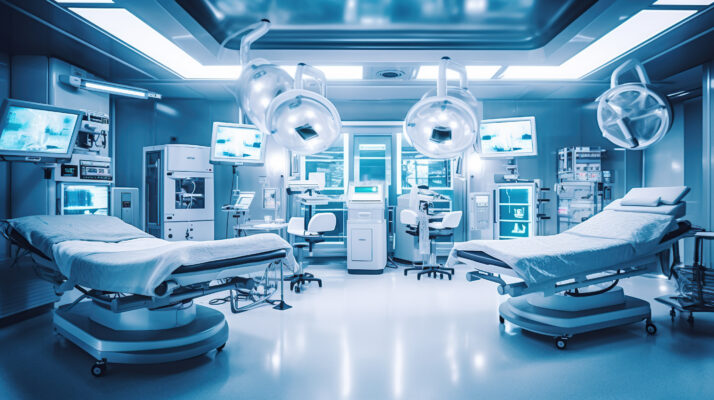
High-tech medical devices improve diagnostic and treatment processes while increasing efficiency. The importance of technology for clinics This is increasingly common. Digital record systems securely store patient information and provide easy access. Telemedicine and remote medical applications offer remote access to patients. Innovative surgical robots and imaging technologies are available. These increase the precision of surgical interventions and shorten recovery times. Technology improves healthcare by raising the quality standards of clinics.
What is the Importance of Technology for Clinics?
 Advanced technology is driving significant change and improvement in the healthcare industry. There are many reasons for this. Advanced medical devices and imaging technologies help diagnose diseases earlier, which can save patients' lives or improve their quality of life. The importance of technology for clinics Automation and digitalization can help clinics operate more efficiently and optimize workflows. This can reduce costs and enable more efficient use of resources.
Telemedicine and remote medical applications facilitate patient communication and enable remote patient monitoring. This increases patient satisfaction and provides better patient care. Digital health record systems securely store patient information, making it easier for healthcare professionals to access the stored data. Furthermore, analyzing this data provides insights into the spread of diseases and provides information on topics such as treatment methods.
Robotic surgical systems increase the precision of surgical interventions. They enable minimally invasive tissue interventions. This can accelerate patient recovery and reduce the risk of complications. The technology supports the education of medical students and healthcare professionals. It also facilitates medical research. Tools such as virtual reality simulations and simulations provide students with hands-on experience and can also provide researchers with the opportunity to collect and analyze data.
Ultimately, technology is vital to clinics. Advances in healthcare improve patients' quality of life. These advancements can also increase the efficiency and effectiveness of healthcare systems. Therefore, clinics must embrace technology and stay constantly updated.
Robotic Surgical Systems
The importance of technology for clinics It also occurs in robotic surgical systems. These are state-of-the-art devices used in surgical procedures. These systems allow surgeons to perform more precise and controllable interventions. Robotic arms, typically controlled by a surgeon, guide the surgical instruments and also perform the surgery. During the procedure, the surgeon typically controls the robotic arms from a console, while the surgical team stands next to the operating table.
Robotic surgical systems offer a number of benefits. First, they can operate through smaller surgical incisions, enabling minimally invasive surgical procedures. This speeds up patient recovery, reduces the risk of infection, and shortens hospital stays. Furthermore, robotic surgical systems increase the precision of surgical interventions. Robotic arms are thinner and more stable than human hands, allowing surgeons to operate in smaller, more complex areas. This allows for more precise procedures and helps increase surgical success.
Robotic surgical systems can also reduce surgeon fatigue. In traditional surgical procedures, surgeons are forced to maintain a position for extended periods. With robotic surgical systems, surgeons can operate comfortably from a console. This reduces surgeon fatigue during surgery and improves performance. However, the use of robotic surgical systems can present some challenges. For example, these systems are costly, and maintenance and training of the devices require expertise. Furthermore, training is essential for using robotic surgical systems. Overall, robotic surgical systems are a significant advancement in the field of surgery. However, expertise is required to use these systems effectively.
What are Internet-Connected Medical Devices?
 They are becoming increasingly important as part of the digital transformation in healthcare. These devices are used to monitor, diagnose, treat, and track patient health. They are devices that can be connected to a network via the internet. IBTCs cover a range of different medical fields. For example, smart bracelets are used to monitor basic health indicators such as heart rate, sleep patterns, and physical activity.
Internet-connected blood glucose meters continuously monitor blood sugar levels in diabetic patients, allowing them to share data with healthcare professionals. Similarly, internet-connected blood pressure monitors regularly monitor the blood pressure of patients with hypertension. IBTCs are also being used in surgery. For example, surgical robots can be internet-connected, allowing surgeons to perform surgical procedures remotely. This increases service availability even when the surgeon is not in the area to perform the procedure.
Internet-connected medical devices offer a number of benefits in healthcare. First, they help patients monitor their health more closely and communicate more effectively with healthcare professionals, leading to earlier diagnosis, more effective treatment plans, and personalized healthcare. Furthermore, the use of IBTCs helps manage healthcare more efficiently. For example, analyzing data from smart medical devices is used to track disease outbreaks.
Additionally, they are used to assess patient health status at a population level. However, the use of IBTCs can also pose certain risks. Data security and privacy concerns are particularly significant. Safely storing and processing incoming health data is crucial for protecting patient privacy. Furthermore, proper device calibration and user training are also crucial. Consequently, internet-connected medical devices play a significant role in healthcare. The importance of technology for clinics It will further impact the healthcare industry in the future. However, it is important to take appropriate measures to ensure the security and privacy of these devices.