
Known as “blepharoplasty” in medical terms, it is a surgical procedure performed to correct aesthetic problems around the eyes. Drooping eyelids It's often used to address sagging, puffiness, and wrinkles around the eyes that occur with aging. This occurs when the eyelid sags or becomes looser than normal.
In Which Situations Is Surgery Appropriate?
There are some situations where surgery is appropriate:
Under-eye bags: It is appropriate for the individual to undergo surgery due to swelling caused by fat accumulation around the eyes.
Sagging skin around the eyes: When the skin under the eyelid becomes loose due to aging, a person may undergo surgery.
Under-eye wrinkles: It is also appropriate to undergo surgery for fine lines and wrinkles around the eyes.
The surgery is usually performed under local anesthesia, and the surgeon trims excess skin and fat, tightens muscles if necessary, and removes excess tissue from the skin to provide a more youthful and dynamic appearance.
What Causes Drooping Eyelids?
 Drooping eyelids It can occur in one or both eyes and can occur for a variety of reasons. Common factors that cause this condition include:
Congenital: In some people, it may occur due to congenital muscle weakness or developmental anomalies.
Aging: As we age, the muscles and connective tissue in the eyelids can weaken, causing this condition to occur.
Eye injuries: Trauma around the eyes may also cause it.
Nerve damage: Damage to the facial nerves can prevent the eyelid muscles from working properly, leading to ptosis.
Eye surgeries: It may appear temporarily or permanently in some patients after surgery.
Neuromuscular disorders: Neuromuscular diseases such as myasthenia gravis can affect the eyelid muscles, causing ptosis.
Underlying diseases: Some systemic diseases or hormonal imbalances can also cause this situation.
Drooping eyelids, Because it limits vision and causes aesthetic concerns, it may require treatment. Treatment methods vary depending on the underlying cause and its severity. Treatment options may include surgery, supplementation with glasses, or treating underlying health problems.
What is the Recovery Process Like?
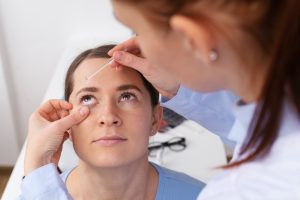 The post-operative recovery process varies from patient to patient, but generally includes the following:
First Days After Surgery: Immediately following surgery, patients often apply a cold compress to the surgical area to reduce swelling and bruising. Mild pain and discomfort around the eyes are normal and can be controlled with prescribed painkillers.
Removing Stitches: The stitches used during surgery are usually removed within 4-7 days. It is important for patients to protect the stitches from moisture and infection during this time.
Swelling and Bruising: Swelling and bruising may occur during the first few weeks after surgery. However, this will gradually subside. Cold compresses can help reduce swelling and speed up the healing process.
Sensitivity of the Eyelids: They may be sensitive after surgery and it is important that they are protected from direct sunlight, wind and dust.
Dry Eyes: Your eyes may feel dry after surgery. Using eye drops prescribed by your doctor can provide comfort and keep your eyes moist.
The Recovery Process: Post-operative swelling and bruising usually subside within a few weeks, but the exact recovery time may vary from person to person. Full recovery and final results are typically evident within 6 to 12 weeks.
Drooping eyelids While surgery isn't a major procedure, it's important to follow the proper recovery process. Carefully following postoperative instructions and following your doctor's recommendations will help ensure a successful recovery.