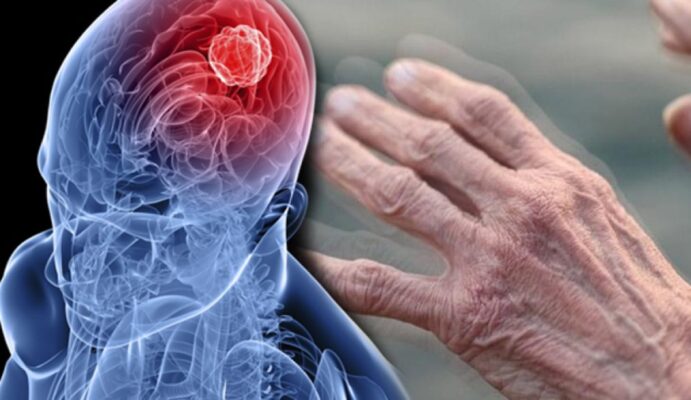
Disorder that causes loss of movement due to central disturbance Parkinson's disease It's called tremor. It's characterized by symptoms such as tremors, muscle stiffness, slowed movements, and loss of balance. It's generally progressive and worsens with age. Neuron loss disrupts brain function, and activities of daily living can become difficult.
What are the symptoms of Parkinson's disease?
Tremors that begin at rest may occur in the hands, fingers, or jaw. Over time, this tremor can spread to other body parts. Muscle stiffness and a feeling of tension can cause difficulty in movement. This slowing of movement can make it difficult to complete daily activities. Patients may experience unsteadiness, walking problems, and an increased risk of falls. Involuntary muscle movements, or tics, may occur as side effects of the medications used for treatment. The patient may have changes in posture, tending to lean forward or round their back.
A slower rate of speech, a monotonous voice, and intelligibility issues may occur. A lack of expression may be observed due to stiffening of the facial muscles. This condition is called "mask face." Difficulty in carrying out daily activities may occur. Mental and emotional changes such as depression, anxiety, forgetfulness, and sleep problems may also occur. Parkinson's disease Symptoms usually progress with age.
What are the Risk Factors for Parkinson's Disease?
It usually appears after age 60, and the risk increases with age. Men are slightly more likely to develop the disease than women. Family history may increase the risk of developing the disease. Certain genetic mutations may increase the risk. However, the role of genetic factors in the development of the disease is still not fully understood.
Exposure to toxins or environmental chemicals may increase the risk. Exposure to pesticides and some industrial chemicals, in particular, may increase the risk. Serious head injuries or repeated head impacts may increase the risk. Remember, these factors are only Parkinson's disease The exact causes are still unclear, and the impact of these factors may vary from person to person.
What are the Treatment Methods for Parkinson's Disease?

Physical therapy can help patients improve their mobility. Physical therapists and rehabilitation specialists provide exercises and movement therapy. As the disease progresses, speech and swallowing problems may arise. Speech therapists can help patients improve their communication skills. Because swallowing problems can cause feeding difficulties, a nutritionist may be consulted. A healthy, balanced diet can help manage the disease. When medication is insufficient or side effects become severe, surgical options may be considered.
Methods such as deep brain stimulation are used to regulate electrical activity. Some patients choose to try alternative or complementary therapies. However, the effectiveness of these treatments has not been definitively proven. Furthermore, they are not recommended without consulting a doctor. The treatment plan may vary depending on the patient's symptoms, age, overall health, and other factors. Parkinson's disease Treatment should be monitored by a doctor experienced in this area. It is also very important to use medications regularly and follow your doctor's recommendations.